 Frontier Correspondent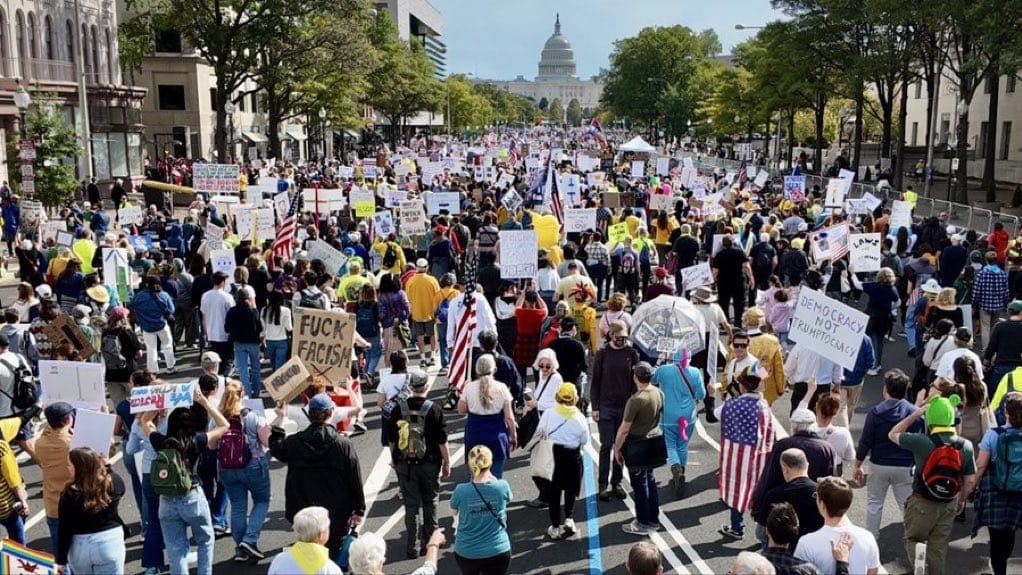
Thousands of protesters took to the streets across the United States on Saturday in a wave of “No Kings” demonstrations denouncing President Donald Trump’s policies on immigration, education, and national security.
Organizers said more than 2,600 coordinated events were planned in cities and towns nationwide, forming one of the broadest displays of civic dissent since Trump’s return to the presidency.
The protests unfold amid a government shutdown now in its 18th day, which has crippled federal services and fueled public anger over what critics describe as an increasingly autocratic presidency.
A Message Echoing Worldwide
The movement’s impact extended beyond U.S. borders, with solidarity rallies held in London, Madrid, and Barcelona. In Northern Virginia, demonstrators marched across pedestrian bridges toward Washington, D.C., while in New York City, Times Square swelled with chants of “Trump’s reign must end!”
One protester in Bethesda, Maryland, held a sign that read, “Protesting is the heart of patriotism,” capturing the defiant mood of the day.
President Trump, speaking from his Mar-a-Lago residence in Florida, dismissed the demonstrations in a Fox News interview, saying, “They call me a king, but I’m no king.”
A Broader Resistance Takes Shape
Unlike earlier protests — such as those triggered by Elon Musk’s budget cuts in the spring or Trump’s military parade in June — the “No Kings” movement has united an unusually broad coalition of civil rights groups, educators, and faith-based organizations.
Senate Minority Leader Chuck Schumer and Senator Bernie Sanders expressed support for the protests, calling them a stand for democracy and accountability.
“This is about the power of the people standing up to authoritarianism,” said Ezra Levin, co-founder of Indivisible, one of the lead organizing networks. The American Civil Liberties Union (ACLU) deployed thousands of trained marshals nationwide to maintain peaceful demonstrations and conduct legal observation.
Partisan Divides Deepen
Republican leaders, however, condemned the rallies. House Speaker Mike Johnson described them as a “Hate America spectacle”, accusing participants of being “antifa radicals” and “anti-capitalist Marxists.”
Senator Sanders swiftly responded on social media, calling the gatherings “love America rallies rooted in the belief that democracy demands dissent.”
A Moment in Modern Protest History
Political analysts say the turnout could rival some of the largest demonstrations in modern U.S. history. Dana Fisher, a professor at American University who studies political activism, estimated participation could surpass 3 million based on pre-registrations and local mobilization data.
“These protests are about forging a collective identity among citizens who feel targeted or anxious under Trump’s policies,” Fisher said. “While they may not directly shift the administration’s agenda, they can energize opposition and influence future elections.”
As the rallies spread from coast to coast, the message was unmistakable: Americans are asserting their right to challenge power. Whether the movement reshapes policy or simply strengthens civic resistance, the “No Kings” protests have underscored a defining tension of Trump’s second presidency — the clash between populist authority and the democratic will of the governed